
Abundant coat
A double coat that provides effective protection from cold, wind and rain.

An iconic Scottish breed
Hardiness, character and authenticity. Highland Cattle have fascinated people for centuries with their distinctive appearance, resilience and ability to thrive close to nature.
Origins

Highland Cattle are one of the oldest cattle breeds in the world. Originating in the Scottish Highlands and the western islands of Scotland, they developed in a demanding environment shaped by wind, rain and harsh winters.
This natural selection gave the breed the exceptional hardiness for which it is still known today.
At a glance
Highland Cattle are instantly recognisable by their striking appearance, abundant coat and long horns. Behind this iconic silhouette is a hardy, calm breed perfectly suited to outdoor life.
A double coat that provides effective protection from cold, wind and rain.

Elegant and distinctive, they give the breed its unmistakable silhouette.

A resilient breed able to live outdoors throughout the year.

Peaceful, curious animals when accustomed to people with patience.
Temperament
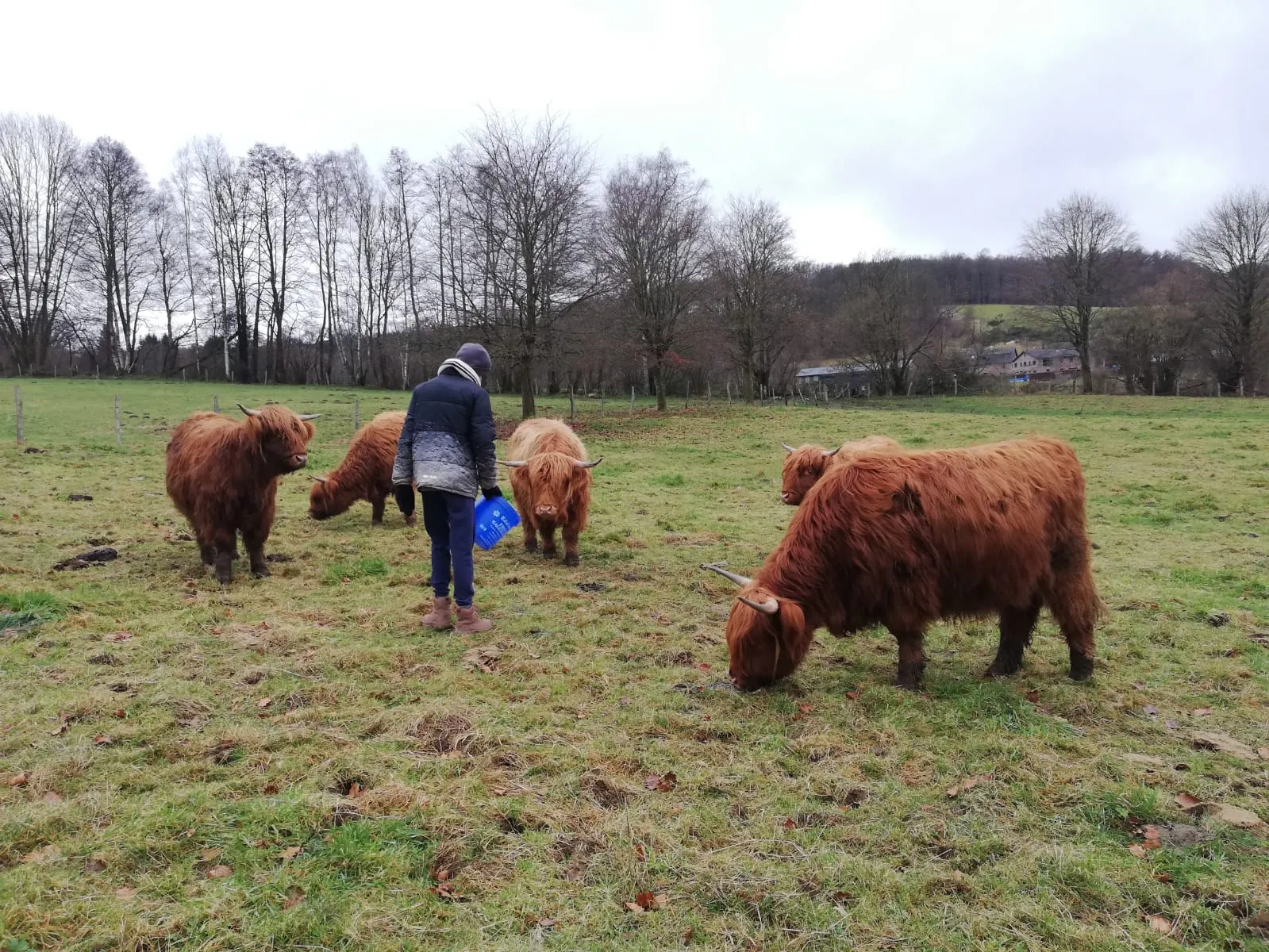
Despite their impressive appearance, Highland Cattle are known for their calm temperament.
When handled properly and accustomed to people, they often develop a trusting relationship with their keepers.
Cows nevertheless remain particularly protective during the first weeks after a calf is born.
Biodiversity
Through extensive grazing, Highland Cattle naturally help maintain many open habitats.
Their presence supports plant diversity and contributes to the care of several nature reserves and protected areas.

Extensive grazing helps keep land open and supports the balance of many natural habitats.
Highland Cattle make natural use of grassland without heavy intervention or intensive maintenance.
Their presence helps limit scrub growth and preserve the open landscapes of our region.
Coat colours
Highland Cattle come in a remarkable variety of coat colours. From deep red and rich black to yellow, white, grey, brindle and silver dun, every shade reveals a different aspect of the breed’s natural elegance.


In Belgium

The first Highland Cattle were introduced to Belgium during the 1970s and 1980s.
Their hardiness, straightforward husbandry and role in conservation grazing quickly appealed to farmers and nature reserve managers alike.
Today they can be found in many parts of the country, particularly in the Ardennes and the High Fens.
Our choice
Because the breed brings together everything we were looking for:
This breed has been part of our daily lives from the beginning and continues to amaze us with its character and adaptability.

Domaine de Chôdes
Discover our farm and the animals that make up our herd.